The Truth About How Decaf Coffee Is Made and How to Choose Beans for Perfect Cup
If you’re sipping on a cup of decaf coffee while reading this, first of all—cheers to you. You're enjoying the mellow, anxiety-free cousin of regular coffee. But have you ever stopped mid-sip and thought:
“Wait... how exactly do they get the caffeine out of coffee beans?”
Great question. It’s not like coffee beans come with a little “off” switch. So today, we’re diving headfirst into the surprisingly complex, slightly science-y, and totally underappreciated world of decaffeination.
First, Why Even Bother with Decaf?
Let’s be honest—decaf coffee gets a bad rap. It’s often the butt of the joke, like ordering a salad at a burger joint or going to a concert for the opener. People love to say things like:
“What’s the point?”
“Just drink water!”
“Isn’t that just coffee with all the fun sucked out?”
But here’s the thing: there are plenty of great reasons people choose decaf, and none of them involve giving up on life.
Let’s break it down:
1. Your Brain Loves Coffee. Your Nervous System? Not So Much.
For many people, caffeine is a frenemy. You crave the focus and alertness… until your heart’s racing, your hands are shaky, and your inbox suddenly seems like a personal attack.
Decaf lets you keep the ritual and the flavor of coffee without having your nervous system tap out before lunch. It's a win-win for anyone who's ever said:
“I love coffee, but coffee doesn’t love me back.”
2. You Want Sleep. Like, Actual Sleep.
Coffee at 8 a.m.? A joy. Coffee at 8 p.m.? A gamble.
But sometimes, you just want that cozy, late-night mug in your hands. Enter: decaf.
With decaf, you can sip after dinner, during a movie, or while journaling at midnight—without lying awake at 2 a.m. questioning all your life choices.
3. Health Reasons & Life Phases
Some folks are told by doctors to cut back on caffeine—think:
- Pregnancy or breastfeeding
- Heart conditions
- Anxiety disorders
- Acid reflux
Decaf becomes a thoughtful, health-conscious swap that still feels indulgent. Because let’s face it: herbal tea just doesn’t scratch the same itch.
4. You Grew Up (Kinda)
There comes a time in every coffee lover’s life when you realize: you don’t always need caffeine—you just want coffee. The smell, the warmth, the vibe. That’s growth.
Decaf is like adulting in a mug. You get the pleasure without the crash, the taste without the twitch. It’s like drinking coffee purely for the aesthetic, and honestly? That’s kind of iconic.
5. You’re Cutting Back—but Not Cutting Coffee Out
Not everyone goes fully caffeine-free. Some people just want to cut back and balance their buzz. Maybe you do:
- Regular coffee in the morning
- Decaf in the afternoon
- A hybrid half-caff situation when you’re playing it safe
Decaf isn’t all-or-nothing—it’s part of a broader coffee strategy. Yes, that’s a thing.
So... How Do You Remove Caffeine from a Bean?
Here’s where it gets fun. There are a few different methods to decaffeinate coffee beans, and they all start with a basic truth:
You can’t decaffeinate roasted beans. It has to happen when they’re still green (AKA raw, unroasted).
Now, on to the methods. Let’s break them down.
1. Solvent-Based Methods (The OGs)
Before there was fancy Swiss water or space-age CO2, there were solvents—the original workhorses of the decaf world. These methods have been around since the early 1900s, which in coffee years is practically ancient.
Don’t let the word “solvent” scare you. While it does sound like something that belongs in a high school chemistry class, the reality is a lot less scary—and way more fascinating.
What Is a Solvent in This Context?
In decaf coffee processing, a solvent is a liquid that selectively dissolves caffeine molecules without taking all the good stuff (like oils, sugars, and flavor compounds) along for the ride.
Think of it like a very picky magnet—it finds the caffeine, grabs it, and leaves the rest behind. And no, you’re not drinking chemical soup. The process is tightly regulated and designed to leave zero detectable residue in your final cup.
There are two main versions of the solvent-based approach, both similar in concept but different in execution:
1. Direct Solvent Method
How it works:
- The green (unroasted) coffee beans are first steamed to open up their pores—kind of like a mini spa day for beans.
- They’re then rinsed repeatedly with a food-safe solvent, usually methylene chloride or ethyl acetate.
- Methylene chloride is lab-made but approved by the FDA in trace amounts.
- Ethyl acetate is often marketed as “naturally derived,” since it can come from fruit or sugar cane (though most of it is synthesized).
- The solvent bonds with the caffeine and extracts it.
- Afterward, the beans are steamed again to remove any residual solvent.
- The now-decaffeinated beans are dried and ready to roast.
Pros:
- Preserves flavor surprisingly well, especially in lower-grade or commercial beans.
- Faster and more cost-effective than water- or CO2-based methods.
- Most widely used in large-scale commercial decaf production.
Cons:
- The word “chemical” can be off-putting for natural/organic shoppers.
- Some connoisseurs claim it dulls more delicate flavor notes.
2. Indirect Solvent Method
This one’s a bit more of a backstage operation—it’s indirect, after all.
How it works:
- The beans are soaked in hot water, which pulls out both caffeine and flavor compounds.
- The water is then separated from the beans.
- A solvent (usually the same ones: methylene chloride or ethyl acetate) is added to just the water, not the beans.
- The solvent removes caffeine from the water.
- The now caffeine-free, flavor-rich water is reintroduced to the beans, which reabsorb their natural oils and flavors.
Pros:
- Even gentler on flavor than the direct method.
- The beans never come into direct contact with the solvent.
- A favorite among European decaf producers (especially in Germany).
Cons:
- Still uses solvents, which some coffee drinkers try to avoid.
- Slightly more complex and time-consuming than the direct method.
So... Does It Taste Good?
Solvent-based decaf has come a long way since the days of sad diner brews. While you might not get the floral notes of a high-end Ethiopian roast, many modern solvent-decaf coffees hold their own in terms of body, richness, and classic coffee flavor.
If you're drinking a supermarket or chain coffee shop decaf, there's a good chance it's been decaffeinated this way—and you probably didn’t even notice.
2. Swiss Water Process® (A Fan Favorite)
If decaf methods were celebrities, the Swiss Water Process® would be the eco-conscious, clean-living, yoga-practicing star with a cult following. It’s the one coffee lovers proudly name-drop when they say,
“I drink decaf, but like... good decaf.”
And honestly? They’re not wrong. This method is 100% chemical-free, incredibly gentle on flavor, and gives off serious wellness influencer energy (but in the best way).
Let’s pull back the curtain and see how the Swiss Water magic actually works.
First, Why “Swiss”? Is It Made in the Alps?
Great question—and surprisingly, no. The process was invented in Switzerland in the 1930s, but today, the Swiss Water Decaffeination facility is proudly located in British Columbia, Canada.
That said, it still carries that crisp, clean, mountain-air vibe—only instead of skiing down a slope, we’re soaking beans in caffeine-free water. Same vibe, fewer avalanches.
How Does It Work?
Get ready, because this method is more like alchemy meets spa day for beans. Here’s a step-by-step breakdown:
Step 1: Soak the Beans
Green (unroasted) coffee beans are soaked in hot water to extract the caffeine and the soluble flavor compounds (oils, sugars, acids, etc.). Basically, everything that makes coffee taste like coffee.
But instead of discarding that flavorful water, we hang onto it—because it's key to the next step.
Step 2: Filter Out the Caffeine
The flavorful water (now rich in coffee solubles and caffeine) is passed through activated charcoal filters, which trap and remove only the caffeine molecules. The flavor compounds pass right through like VIPs at a velvet rope.
This results in something called Green Coffee Extract (GCE)—essentially caffeine-free water that’s fully saturated with coffee flavors.
Step 3: Soak New Beans in the GCE
Now comes the genius part. New batches of green beans are soaked in the caffeine-free GCE. Because this solution is already loaded with flavor compounds, the new beans don’t lose their flavor—only their caffeine diffuses out into the water.
That’s science, baby: diffusion works best when there's a difference in concentration. Since there’s no caffeine in the GCE but plenty in the beans, caffeine naturally flows out—without pulling the good stuff with it.
Step 4: Rinse, Repeat, Dry, and Roast
This gentle soaking process continues until the beans are at least 99.9% caffeine-free. Then the beans are dried, bagged, and sent off to be roasted—by your favorite local roaster or specialty café.
The result? Decaf coffee that tastes shockingly close to its fully-caffeinated self.
Why People Love the Swiss Water Process®
Let’s be real—there’s a reason this method is often stamped right on the bag in bold letters. It comes with a lot of perks:
1. Chemical-Free, Certified Organic
No solvents, no lab-made substances, no scary acronyms. Just water, time, temperature, and filters.
If you care about natural processing, clean-label coffee, or avoiding anything that sounds like it belongs in a lab coat’s pocket—this is your method.
2. Preserves Complex Flavors
Because the GCE method lets beans keep their original flavor compounds, you can still taste:
- The chocolatey body of a Central American bean
- The fruity zing of an Ethiopian roast
- The floral notes of a delicate light roast
In other words, it doesn’t taste “flat” like older decaf methods used to. You might even forget it’s decaf.
3. Eco-Friendly and Transparent
Swiss Water® operates with a big focus on sustainability. Their facility runs on hydroelectric power, and they’re certified Kosher, Organic, and Fair Trade compliant (depending on the beans used).
Also? They’re super transparent about their process, which is refreshing in a world where decaf sometimes feels like a mystery drink.
4. You Can Taste the Craft
This method is popular among third-wave coffee roasters, who care deeply about bean origin, roast level, and ethical sourcing. So if you’re buying specialty decaf from a local or high-end roaster, chances are it was Swiss Water processed.
Translation: you’re getting a decaf that’s treated with as much respect as its caffeinated siblings.
But Is It Perfect?
Like all things, it’s not flawless:
- More expensive: It’s a slower, more labor-intensive method, which can raise the price of Swiss Water decaf beans.
- Availability: Not all roasters offer it, especially at lower price points or in mass-market settings.
But if you're into quality, sustainability, and flavor preservation, it's hard to beat.
Swiss Water Decaf = Decaf Done Right
If you've ever had a bad decaf experience (think: weak, bitter, cardboard-flavored brew), Swiss Water Process® is here to redeem it.
It proves that decaf can be delicious, clean, complex, and even kinda cool.
So the next time you're choosing your beans, look for that little blue Swiss Water logo. It’s not just marketing fluff—it’s a promise that your cup of decaf was crafted with care, science, and flavor in mind.
3. CO2 (Carbon Dioxide) Method
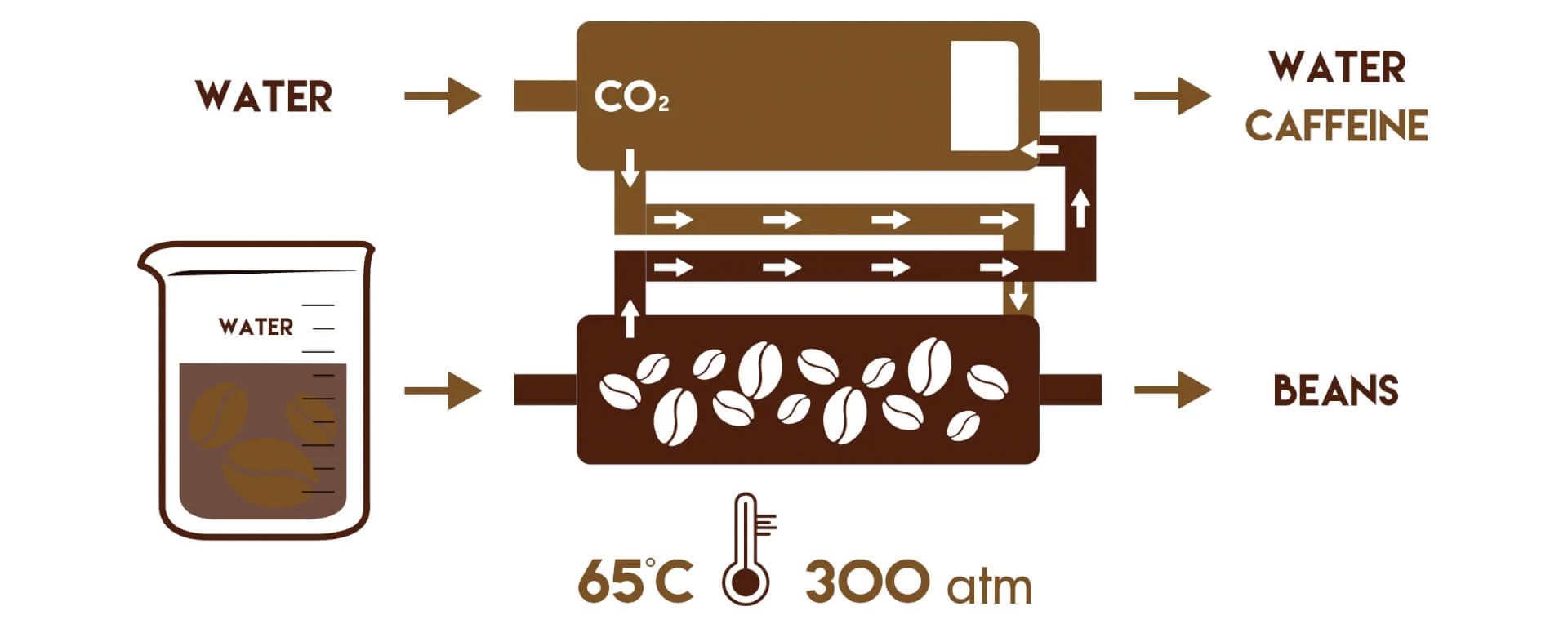
The CO₂ method, also known as the supercritical carbon dioxide process, is one of the most high-tech and precise ways to decaffeinate coffee. It’s like decaf... but engineered for maximum flavor retention and minimal fuss.
Let’s break it down.
What Even Is Supercritical CO₂?
To understand this method, we need to talk about supercritical fluids. Don’t worry—no chemistry degree required.
Carbon dioxide (CO₂) is a gas at room temperature, right? But under the right conditions—specifically high pressure and moderate heat—CO₂ enters a state called supercritical, where it behaves like both a gas and a liquid at the same time.
Think of it like the multitasker of the physical world: it can penetrate solids like a gas but dissolve substances like a liquid.
That makes it perfect for sneaking into coffee beans, grabbing the caffeine, and tiptoeing back out—leaving most of the flavor behind.
How the CO₂ Method Works: Step-by-Step
1. The Beans Are Steamed or Soaked
Green (unroasted) coffee beans are moistened with water to open up their cell structures. This helps them release caffeine more easily later on.
2. Supercritical CO₂ Is Introduced
The beans are placed in a high-pressure extraction chamber, and CO₂ is pumped in at about 1,000 psi (pounds per square inch). That’s roughly 60 times atmospheric pressure—like sending your coffee beans on a deep-sea diving expedition.
3. Caffeine Extraction Begins
In its supercritical state, the CO₂ moves through the beans like a gas but dissolves and absorbs only the caffeine, leaving most of the precious oils, sugars, and flavor molecules alone.
4. Caffeine Is Removed from the CO₂
The now caffeine-saturated CO₂ is transferred to another chamber, where the pressure is lowered. This causes the CO₂ to release the caffeine, which is then captured for other uses (like pharmaceuticals or energy drinks—yes, really).
6. Rinse and Repeat
The process continues in cycles until the beans are 99% caffeine-free. Afterward, they’re dried and sent off for roasting.
Why Use CO₂? The Big Benefits
1. Highly Selective Caffeine Removal
This method is laser-precise. It targets caffeine molecules almost exclusively, meaning it leaves behind the flavor compounds that make each origin or roast profile unique.
Great news for coffee snobs—er, enthusiasts—who want to keep those citrus notes or nutty undertones intact.
2. No Harmful Chemicals
CO₂ is a naturally occurring gas (you’re exhaling it right now) and is non-toxic, non-flammable, and recyclable within the system. That means this method avoids any synthetic solvents entirely—without needing to market itself as “chemical-free” (because, again, everything’s a chemical).
3. Ideal for Premium Beans
Because of its gentle effect on flavor, the CO₂ method is often used for specialty-grade beans, single-origin decafs, and espresso roasts where flavor integrity really matters.
You won’t typically find CO₂-decaf at your average diner—but at your local third-wave café or in high-end retail blends? Absolutely.
4. Sustainable & Efficient
The CO₂ in this process is captured, recycled, and reused multiple times, making it a relatively low-waste method. It’s a great option for environmentally conscious producers and brands who care about carbon footprints and caffeine levels.
Are There Any Downsides?
Sure, nothing’s perfect. Here are a few trade-offs:
1. Expensive Infrastructure
The high-pressure chambers and advanced machinery required make this one of the most costly decaf methods to operate. That’s why you’ll often see it reserved for high-end beans where the price can be justified.
2. Not Widely Available
Because of the cost and technical requirements, CO₂ decaf isn't as common as solvent-based or Swiss Water options. So if you’re looking for it, check the label or ask your roaster.
3. Harder to Market to the Average Shopper
Let’s be real: “supercritical fluid extraction” sounds like something from a sci-fi film. It’s harder to make that sound warm and cozy on a coffee bag. But coffee nerds? They eat it up.
How to Spot CO₂ Decaf in the Wild
Coffee brands may refer to this method as:
- CO₂ Process
- Carbon Dioxide Method
- Natural Carbon Dioxide Decaffeination
- Or simply: “Naturally Decaffeinated (CO₂)”
Pro tip: It’s often used in German roasters, European brands, or specialty espresso blends that prioritize flavor above all else.
CO₂ Is the Future of Flavor-Friendly Decaf
The CO₂ method proves that decaf doesn’t have to mean compromise. With its scientific precision and respect for flavor integrity, it delivers a rich, complex cup—minus the jitters.
So next time you drink a decaf that tastes just like the real thing, there’s a chance it had a little help from some high-pressure carbon dioxide doing its silent, scientific magic.
Because in the end, great decaf isn’t an accident—it’s a finely-tuned extraction of excellence.
Wait—So Is Decaf Totally Caffeine-Free?
Surprise: nope! Almost all decaf coffee still contains a teeny bit of caffeine.
Most decaf methods remove about 97% to 99.9% of the caffeine.
For example:
- A regular 8 oz cup of coffee = ~95 mg of caffeine
- A decaf 8 oz cup = ~2 to 5 mg
So unless you’re a caffeine detective, your body probably won’t notice the difference.
Is One Method Better Than the Others?
It depends on what you value:
- Cost-effective and widely available? Solvent-based.
- Organic and chemical-free? Swiss Water Process.
- Flavor preservation and innovation? CO2 method.
If you buy from specialty roasters or third-wave cafés, chances are they’ll proudly tell you which process they use (especially if it's Swiss Water or CO2).
How to Choose a Great Decaf
1. Check the Decaffeination Method
This is your first major clue to how the coffee will taste—and how it was processed.
Here’s a quick cheat sheet:
| Method | Flavor | Chemicals? | Common In |
| Swiss Water Process | Clean, full-bodied, preserves origin character | No | Specialty, organic, premium decafs |
| CO₂ Method | Bright, nuanced, very close to regular | No | High-end espresso blends, European brands |
| Solvent-Based (Direct/Indirect) | Solid, reliable, slightly muted | Yes (but safe) | Grocery store brands, big roasters |
Pro tip: Check the bag or roaster’s website—most proud specialty roasters will gladly share their process.
2. Look for Freshly Roasted Beans
Old, stale coffee = flat decaf.
Freshly roasted beans = vibrant flavor, even without the buzz.
What to look for:
- A roast date on the bag (not just a “best by” date)
- Whole beans instead of pre-ground (they stay fresher longer)
- Local or small-batch roasters who roast to order
If your decaf doesn’t smell like real coffee, it probably isn’t fresh. Trust your nose.
3. Choose the Right Roast for Your Taste
Decaf comes in all roast levels—from light and citrusy to dark and chocolatey. But because decaf beans are slightly more delicate (thanks to the processing), certain roasts can work better than others:
- Light Roast: More acidity, origin flavor shines (great for pour-over fans)
- Medium Roast: Balanced and versatile (ideal for drip or AeroPress)
- Dark Roast: Bold, rich, less nuanced (perfect for espresso or French press)
Don’t assume all decaf has to be a dark roast—it doesn’t! Specialty roasters are now experimenting with single-origin, lightly roasted decafs that taste just as complex as their caffeinated counterparts.
4. Know the Origin (and Why It Matters)
Just like regular coffee, the origin of your decaf beans will influence flavor:
- Latin America (e.g., Colombia, Brazil): Nutty, chocolatey, smooth—great for comfort coffee vibes
- Africa (e.g., Ethiopia, Kenya): Fruity, floral, complex—more adventurous flavor profiles
- Indonesia (e.g., Sumatra): Earthy, spicy, full-bodied—perfect for dark roast lovers
Origin still matters in decaf—especially when it’s been processed in a way that preserves those regional flavors (Swiss Water and CO₂ are best here).
5. Experiment with Brew Method
Decaf behaves slightly differently than regular coffee when brewed—it’s more porous and less oily, which can affect extraction.
Here’s how to get the most out of your decaf beans:
| Brew Method | Tip |
| Pour-Over (e.g., V60, Chemex) | Use a slightly finer grind and hotter water (~205°F) to help extract flavor |
| French Press | Go a bit coarser on grind, steep slightly longer |
| Espresso | Try a medium-dark roast decaf for richer crema and body |
| Cold Brew | Use a medium grind and brew 12–16 hours—decaf cold brew can be ultra smooth |
You might need to tweak your usual recipe just a little, but once you dial it in? Decaf becomes just as satisfying as your go-to brew.
6. Read Reviews or Ask Your Barista
Still unsure? Let someone else do the homework.
- Check online reviews from trusted coffee bloggers or specialty coffee retailers.
- Ask your favorite local barista what they recommend. Many cafes now offer decaf espresso options that are just as crafted as their main blends.
- Look for phrases like:
“You’d never guess it’s decaf!”
“Tastes like a regular single-origin.”
“Smooth and full-bodied with zero bitterness.”
These are all good signs you’ve found a winner.
Our picks:
San Francisco Bay Coffee
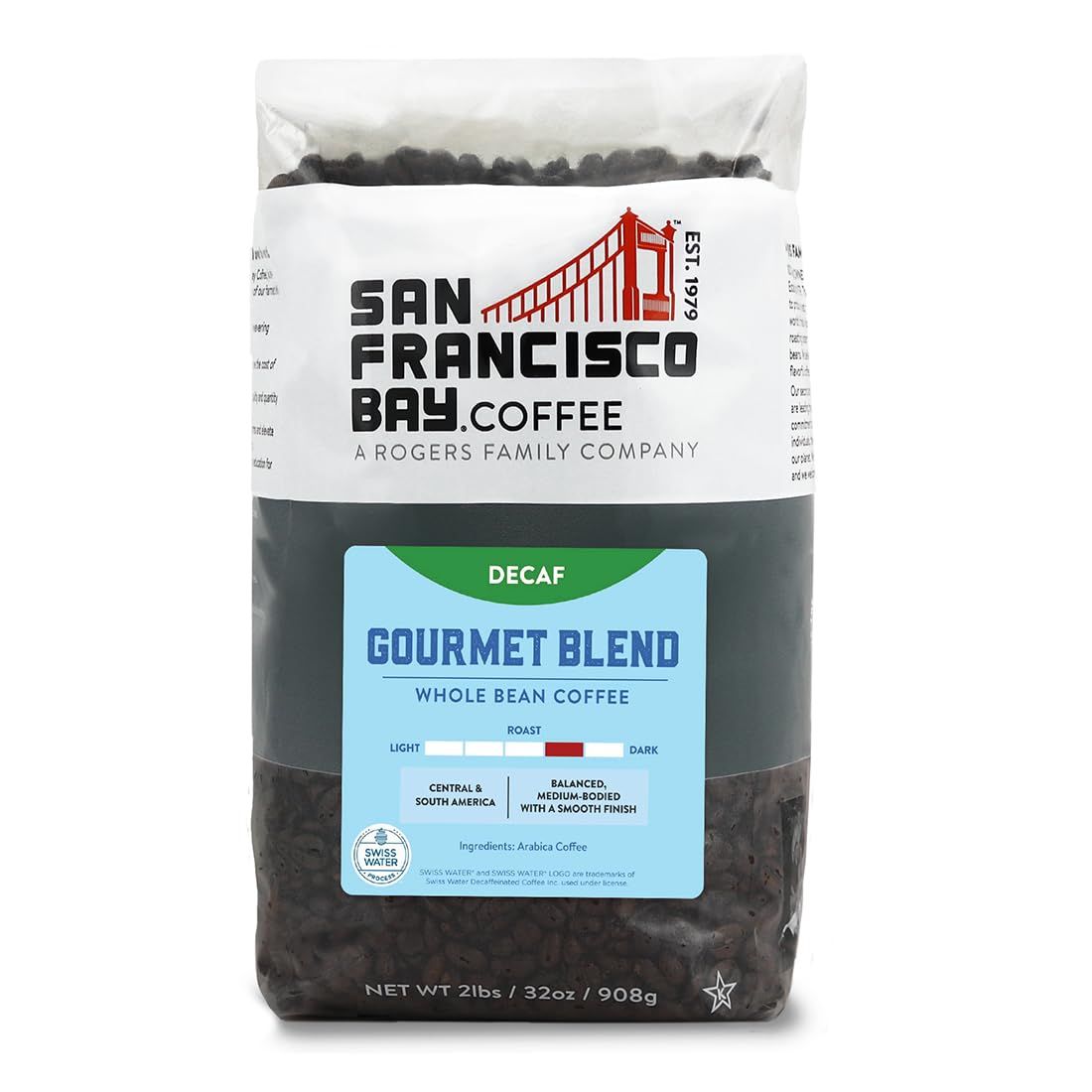
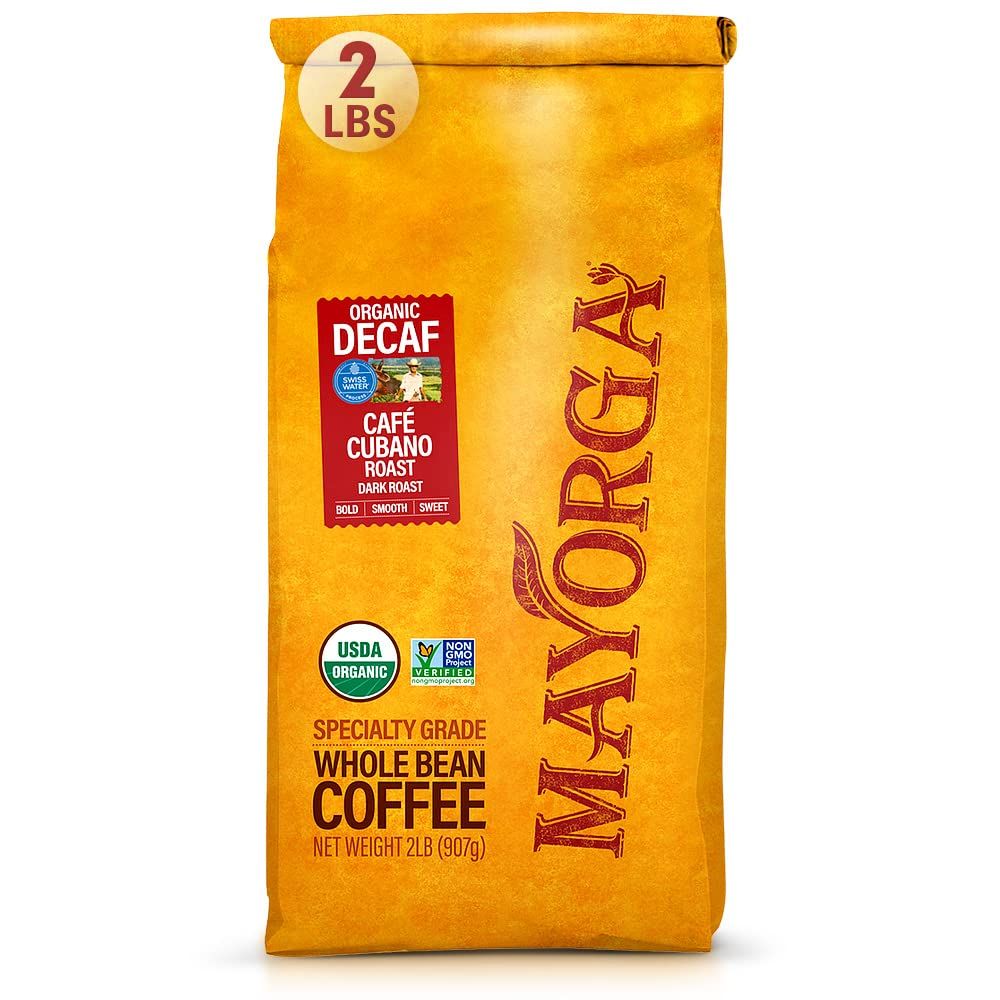
Mayorga Decaf Coffee
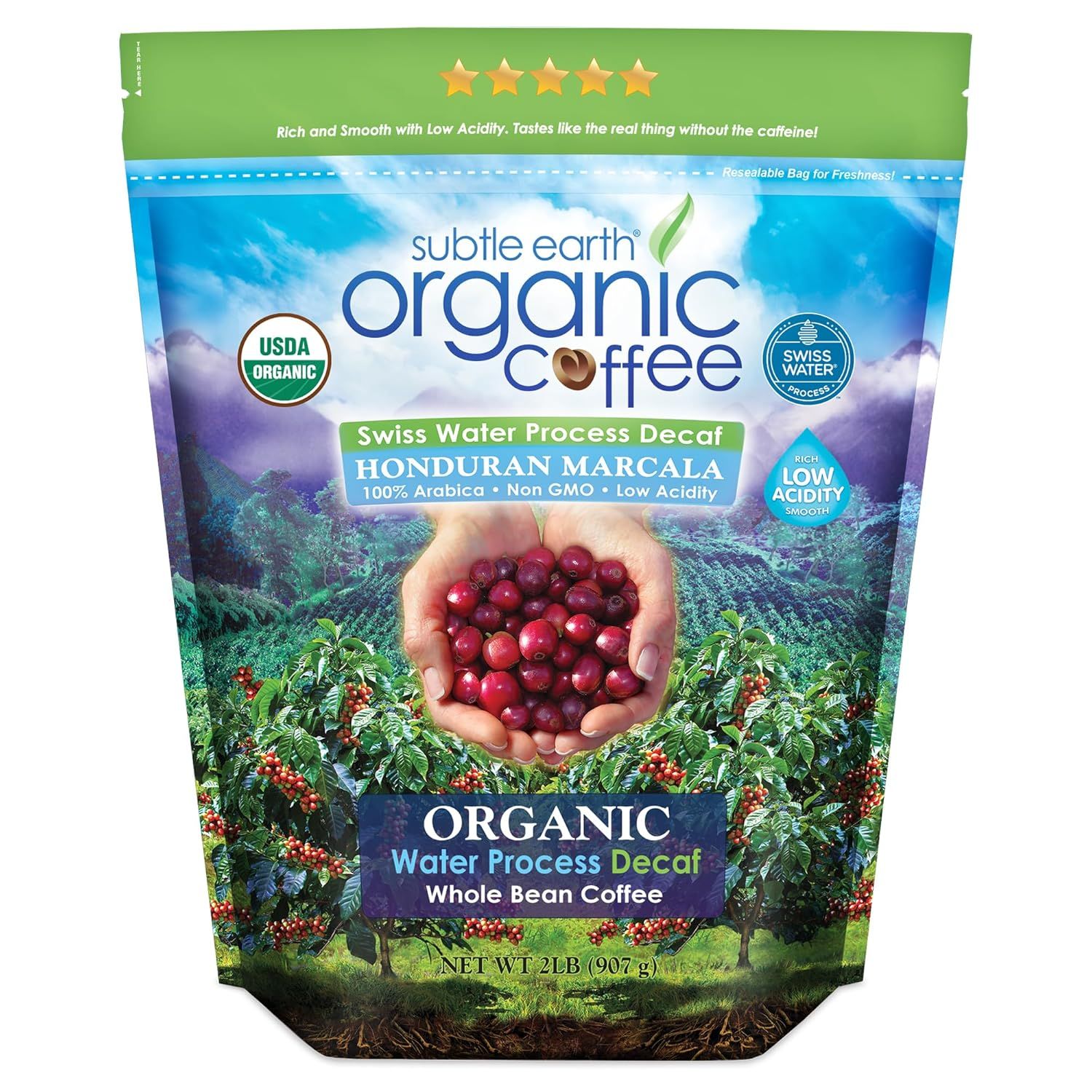
Subtle Earth Organic Decaf
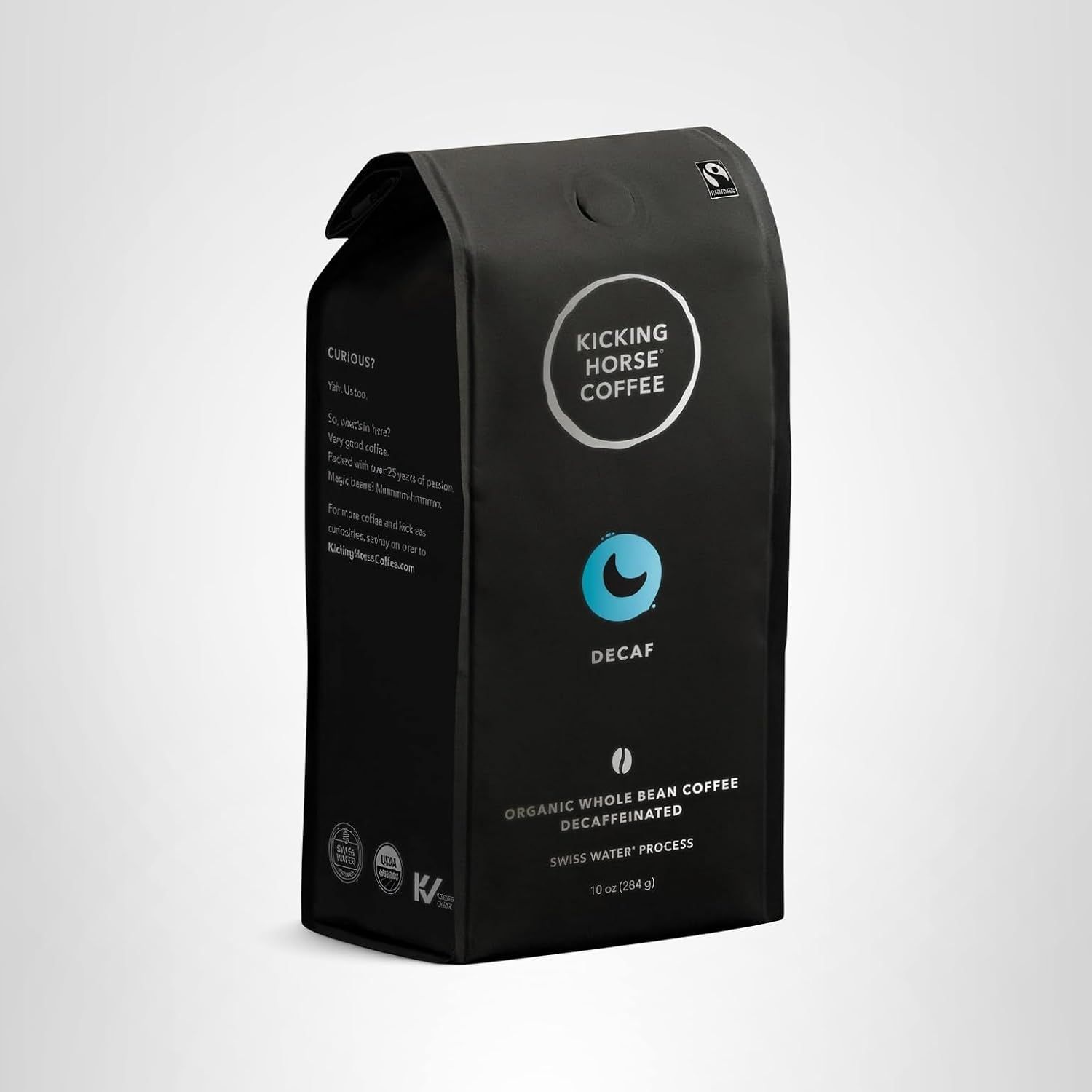
Kicking Horse Coffee
Consider Half-Caff or Blend Your Own
Want to reduce caffeine gradually or enjoy a smoother ride without fully switching?
Try a half-caff blend, or even mix your favorite regular beans with a high-quality decaf at home (50/50 ratio). You’ll get the best of both worlds: flavor and moderation.
Don’t Settle for Boring Decaf
Gone are the days when decaf was dusty, bitter, and barely coffee. With better processing methods, passionate roasters, and a growing appreciation for coffee without the jitters, your options are better than ever.
There’s something kind of sophisticated about enjoying coffee purely for the taste—not the kick.
Now that you know what goes into crafting that mellow cup, you can appreciate your decaf on a whole new level.
Because behind that smooth sip? There’s a whole world of chemistry, care, and craft.